—
Virginia voters narrowly approved a Democrat-backed redistricting plan last week, granting Democrats a sizeable boost in their attempt to take four additional U.S. House seats in the midterm elections.
But certification of the election was halted last week, and what’s next remains to be seen. Virginia Democrats continue to take a victory lap, while Republicans hold out hope multiple legal challenges will prevail in their favor. Opponents of the referendum were handed a victory Wednesday, when a judge out of Tazewell Circuit Court issued an order blocking certification of the election and the implementation of the new maps.
It’s one of several legal challenges in which Republicans are primarily arguing Virginia Democrats violated the state constitution in how they got the referendum on the ballot and are challenging the ballot language.
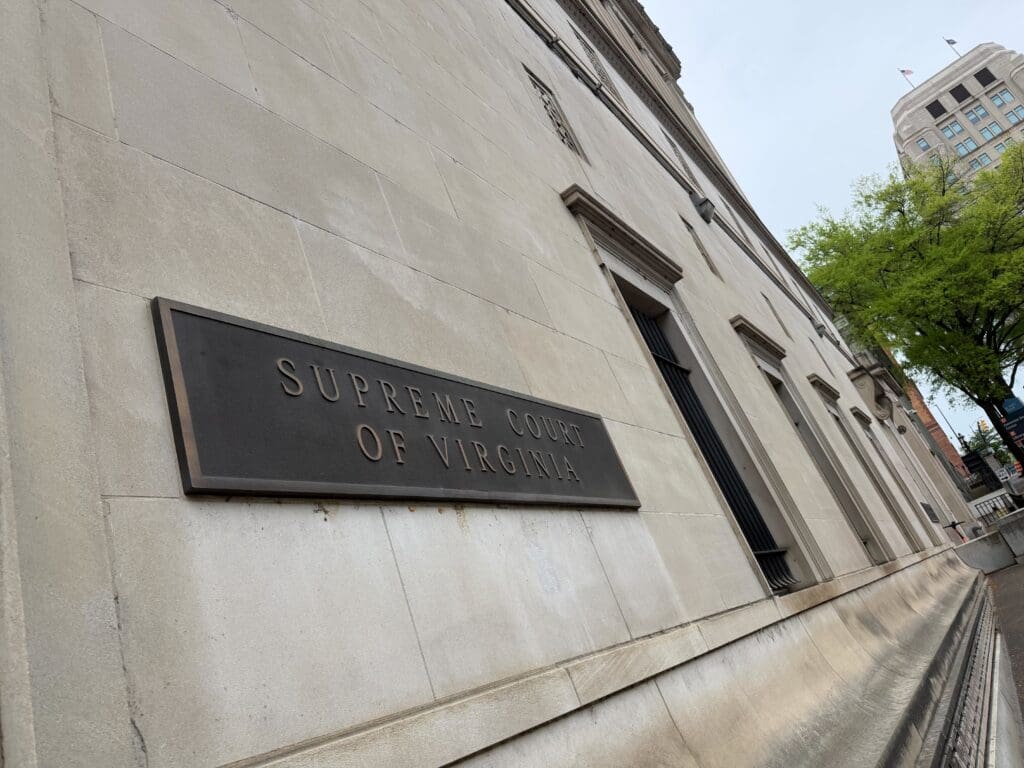
The Supreme Court of Virginia is poised to have the final say. Justices will hear oral arguments in one of the cases Monday.
The special election drew the influence of national political heavyweights, with proponents and opponents spending tens of millions in a contentious messaging battle. Under the temporary maps, Democrats would have the advantage in 10 of the state’s 11 congressional districts. Currently, Democrats hold six seats to Republicans’ five.
Time is running out for a resolution to the legal questions. The deadline to file as a candidate for Congress in Virginia is May 26, according to the state Department of Elections.
“Right now, voters don’t know what district they’re in, and candidates don’t know what district they’re going to run in,” said Stephen Farnsworth, a political science professor at University of Mary Washington. “Fortunately, the Virginia Supreme Court tends to move a lot faster than the U.S. Supreme Court, but time is clearly of the essence right now.”
Here’s the status of the redistricting lawsuits.
Republican National Committee v. Virginia Department of Elections Commissioner Steven Koski
The issue ordered Wednesday blocking certification of the election was in the case of Republican National Committee v. Virginia Department of Elections Commissioner Steven Koski, which originated in Tazewell Circuit Court. The court order effectively blocks any actions to implement the newly adopted maps, including updating and altering election districts and voter registration records as well as using the maps in subsequent congressional and general elections.
RNC and other Republicans filed the lawsuit in February, arguing the amendment is unconstitutional because it was not approved by two different assemblies and because voting started less than 90 days after final passage of the amendment.
The April 21 ballot referendum was for a constitutional amendment, which by law requires the General Assembly to pass the measure twice with a House of Delegates election in between. Democrats argue they followed state code because they first approved the measure in fall 2025, followed by a House election in November, and a second vote of approval in January.
In March, the Virginia Supreme Court ruled the referendum vote could take place while the case is heard, and sent it back to Tazewell Circuit Court for the final order.
“It is the process, not the outcome, of this effort that we may ultimately have to address,” the ruling said. “Issuing an injunction to keep Virginians from the polls is not the proper way to make this decision.”
In last week’s order, Tazewell Circuit Judge Jack Hurley ruled the referendum illegal on several counts, declaring the initial vote of approval in October is void as it violates Virginia’s constitution. The judge also said the ballot language in the legislation adopted for the maps is a “flagrantly misleading question to the voters, and because the ballot language did not accurately describe the proposed amendment as it was passed by the General Assembly.”
Attorney General Jay Jones filed a motion Thursday seeking to halt the judge’s order until an appeal can be heard, arguing a pause “preserves both sides’ arguments while preventing irreparable consequences that cannot be undone after the fact.”
As of Friday, Virginia Supreme Court has agreed to take up the case, a spokesperson in Jones’ office confirmed. No hearings have been scheduled.
Virginia House Speaker Don Scott v. Virginia Republican Senate Minority Leader Ryan McDougle
Another case that originated in Tazewell Circuit Court will be up for oral arguments Monday in Virginia’s Supreme Court.
McDougle, who’s also a member of Virginia’s Redistricting Commission, is among the plaintiffs challenging the General Assembly’s October special session called to initiate the ballot referendum. They assert only the governor, not Scott, may convene or expand the scope of a special session. When they filed the lawsuit in October, they attempted to block the introduction of the constitutional amendment, arguing it violated the state constitution.
In January, the court found the bill to amend the constitution during the last special session void and granted a temporary and permanent injunction in favor of Republican plaintiffs. Defendants — including Democrats Scott, Senate President Pro Tempore Louise Lucas and Senate Majority Leader Scott Surovell — were successful in their subsequent appeal, and the Virginia Supreme Court allowed the election to move forward.
In the outstanding cases, Farnsworth said the courts are grappling with two big questions.
“One is ‘was this measure properly sent to the voters in the first place? Were the procedural requirements followed for a constitutional amendment?’ ” Farnsworth said. “This was an accelerated process, and critics of the measure are complaining that the process didn’t comply with the law.
“There’s also questions about the wording of the amendment that raise questions about the level of clarity of the text. I would anticipate the first issue being a more significant challenge than the second one on the wording.”
Republican National Committee v. Virginia State Board of Elections
In a separate case, Republican plaintiffs are also challenging state lawmakers’ authority to alter the congressional maps approved by the Virginia Supreme Court in 2021. Plaintiffs argue the new maps are not “compact,” as required by the state constitution, and that they “completely destroy” the current maps by replacing them with “a radically different” set of congressional district lines. The lawsuit seeks to block the General Assembly from repealing the 2021 map.
A hearing for a preliminary injunction was held April 20 in Richmond City Circuit Court, but no rulings had been issued at the time of publication. No subsequent hearings or court dates were scheduled, according to case information available online.
Other legal challenges
A few other cases have since been dismissed. That includes City of Lynchburg v. Koski; a lawsuit filed by Republican U.S. Reps. John McGuire and Rob Wittman in February against the state board of elections; and a third filed by circuit court clerks in Spotsylvania, Lunenburg and Henrico counties.
The Lynchburg case sought to clarify whether Virginia elections officials were blocked from preparing the referendum due to conflicting rulings: a temporary restraining order from a separate case was upheld in February, but the Supreme Court ordered the referendum to proceed.
The circuit court dismissed that complaint in March.
McGuire and Wittman tried to block the April 21 vote, arguing the ballot question doesn’t reflect the substance of the amendment as passed by state lawmakers and that it’s misleading, false and does not offer a neutral explanation of the amendment. Scott, Lucas and Surovell intervened as defendants, and plaintiffs voluntarily withdrew their lawsuit and the case was dismissed in March.
Circuit court clerks attempted to challenge the legality of the special session that advanced the proposed constitutional amendment and invalidate the entire process. After a failed attempt to get a temporary restraining order in November, the court granted the plaintiffs’ voluntary dismissal.
Natalie Anderson, 757-732-1133, [email protected]